
Core exercises work muscles around the abdomen, back and pelvis. Mayo Clinic describes several movements that can be practiced on a floor or mat. Below is a brief introduction to three options. Learn the technique before building a routine, and ask a healthcare professional first if you have back problems, osteoporosis or other health concerns.
1. Bridge
Lie on your back with your knees bent and your back neutral. Tighten your abdominal muscles, then lift your hips until your shoulders, hips and knees line up. Breathe freely before returning to the starting position.
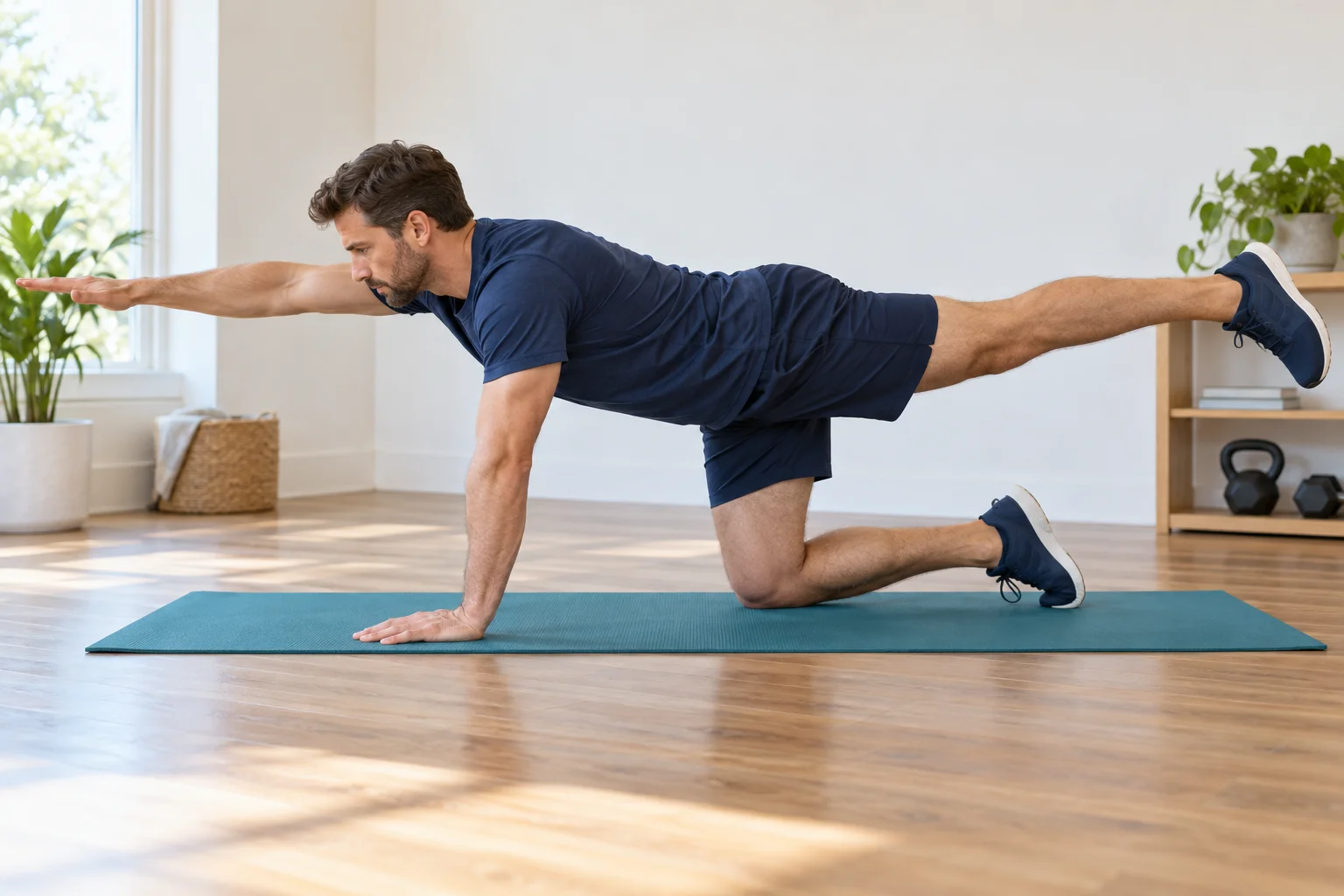
2. Bird-dog movement
Begin on hands and knees with hands under shoulders and your head and neck aligned with your back. Practice raising one arm or one leg first. Raising an opposite arm and leg together is a more advanced variation.
3. Modified plank
Rest on your forearms and knees with shoulders above elbows. Tighten your abdominal muscles and keep your body aligned. Breathe normally while holding the position, then return to rest.
Choose a suitable starting point
An illustration is not a personalized technique assessment. Review the source guide, including its exercise demonstrations, and consider asking a qualified trainer or physiotherapist to check how you move. Choose a variation you can control instead of trying to match another person’s speed or range.
Prepare your space
Use a clear area where you can get down to the floor and stand up comfortably. Move furniture or other obstacles before starting. Keep the source guide available so you can review the instructions between attempts rather than rushing from one exercise to another.
Build a routine around quality
This introduction does not set a target for repetitions or hold times. Write down the variation you are learning and any questions about technique. Rest when needed, and do not push through pain. A professional can help you adapt the exercise if a movement is uncomfortable or unsuitable.
Common question: Do these exercises replace all other activity?
This article introduces a few core movements, rather than a complete fitness program. Consider them within a broader routine suited to your goals and circumstances. Use the linked demonstration as a reference, and get individual guidance when you need it.